


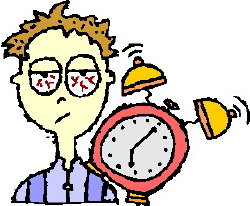
 I am NOT a morning person. And by that I don’t mean that I just don’t enjoy getting up early. I mean I am NOT a morning person at all. The perfect schedule for my natural body clock was the years that I was freelancing as a musician. First thing in the morning was 10am – ish. A little toast and coffee, lunch around 4 or so, go to work at 7pm, dinner around 11, listen to a little music or watch late night television [there were no DVR’s in those days] and get to bed by about 2am. It was perfect.
Of course, I wasn’t a runner back then. But, I did practice every day and often practiced in the early afternoon. I don’t know if it’s just a lingering habit or my circadian rhythm but that’s exactly when I like to run – or walk – or bike. Early afternoon. That’s MY time.
Please don’t email me and tell me how beautiful and peaceful it is in the morning. Or how it get’s your day started right. I get it. I get that SOME people like it. I don’t. And, by the way, it’s VERY peaceful at 2 in the morning too. Not if you’re getting up at 2, but if you’re going to bed at 2.
Let me explain why running in the afternoon is better than running in the morning. First off, in the morning you’re never sure what to wear. Will you be cold at the start? Will you be too warm later on. When you run in the afternoon you already know what the temperature is and what it’s going to be. You don’t need to try to figure out what to wear.
Then there’s the whole “what should I eat before I run” conundrum. Do I eat nothing? Do I eat a little? Do I drink coffee? Do I AVOID coffee? Good grief. When you run in the afternoon you don’t have to think about any of that. You’ve been up for hours. You have, at the very least, had breakfast. So, you’re ready to go.
And speaking of being ready to go, the whole being “ready to go” morning concerns are gone by the afternoon. Should I go? Do I have to go? What if I get out there and THEN I have to go. You have to plan your routes around gas stations or public restrooms. It’s a nightmare. When you run in the afternoon you have ALL morning to take care of whatever business you need to take care of. You’ll be much more relaxed.
And speaking of business, one of two things are true if you run in the morning; 1) you check your email and Facebook and Twitter and all your other social media accounts before you  run and THINK about what you have to do when you get back from your run, or, 2) you DON’T check your email and social media accounts and WONDER the whole time your running what your Facebook friends are doing that morning or what clever Tweet you might be missing or whether you got an email saying that someone in Nigeria needs to send you $3,000,000 dollars if you’ll only send them your banking information.
When you run in the afternoon you already know what your Facebook friends are doing. [Fluffy got a new cat box, Little Bobby learned to pee standing up, and some high school friend that you didn’t like 40 years ago somehow thinks that you’ve forgotten how lame they were back then and want to reconnect] So, you realize that there’s nothing to think about and especially nothing to worry about. You can just run.
There are other reasons; it’s light out, other people aren’t out walking their dogs, or rushing to work; you get the point. It’s just better. I know that not everyone can run in the afternoon, but, someday when you CAN, give it a shot. I think you’ll find it’s a lot more satisfying than you thought.
Waddle on, friends.
John
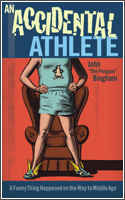
 An Accidental Athlete is available in print and ebooks versions now. BUY THE BOOK
Review An Accidental Athlete on Amazon or Barnes and Noble
What others are saying: Looking for some motivation to start running and improve your fitness? You’re sure to find some inspiration from John Bingham’s new memoir, “An Accidental Athlete.” As an overweight, uninspired pack-and-a-half-a-day smoker, Bingham realized that he had to make some changes in his life and began running at the age of 43. With wit and humor, Bingham recounts his journey from couch potato to self-proclaimed “adult on-set athlete.”– ESPN Gear Guide
Filed under: Bingham, family, Half Marathon, John "the Penguin" Bingham, motivation, Penguin, Uncategorized | Tagged: Bingham, Penguin, running | 3 Comments »


 The Penguin Chronicles
You must be logged in to post a comment.