• Unknown's avatar
    He's been called the Pied Piper of the Second Running Boom. Once an overweight couch potato with a glut of bad habits, including smoking and drinking, at the age of 43 Bingham looked mid-life in the face—and started running.

  • Enter your email address to subscribe to this blog and receive notifications of new posts by email.

    Join 557 other subscribers
  • PC Blog Archives

The Chicken and the Pig

bacon and eggsMy old buddy Coach Roy Benson had a simple way of explaining the difference between involvement and commitment. He would say that when you think of a breakfast of bacon and eggs, the chicken is involved, the pig is committed. With apologies to my Vegan friends, it certainly sums it up.

I hear lots of talk about how today’s runners aren’t as committed to the sport as were the runners in the 70’s or 80’s. Today’s runners are criticized for not being willing to put in the time and miles.

I hear that they’re only involved in the events and the travel and the social aspects, that they just want to have fun, to enjoy a healthy active lifestyle without paying their dues. Really?

I have exercised in some fashion for over 20 years. I’ve been a runner, a walker, a duathlete, a triathlete, an adventure racer, kayaker, swimmer, and cyclist. And I haven’t been very good at any of them. And – I’ve enjoyed every minute of every day that I’ve been active. To say that I’m not committed, that I’m just involved, is pure poppycock.

Now, it’s true that there were years in my life where I was able to be more committed to competing. Especially in the early years when every race distance and every race experience was new I spent more time planning, training, and racing. I’d spend hours creating elaborate training schedules based on what I viewed as the best of what was available, and I’d commit to getting in the training no matter what.

That “no matter what” often included an ache or a pain or an injury. I was committed. I couldn’t miss a workout or my whole training strategy would fall apart. Or so I thought. In my commitment I was stressed out and often disappointed that I wasn’t improving more quickly.

At some point I began to worry less about my level of commitment and more about my level of joy. It occurred to me that I wouldn’t keep doing the things that I enjoyed if I took all the joy out of the activities.

My commitment never changed. What changed was how I expressed that commitment. What also changed was that I remembered what I got started with all this in the first place; to have fun.

Waddle on, friends.

You can follow me on Twitter: @jjbingham

and on Facebook: @john thepenguin bingham

An Accidental Athlete is available in print and ebooks versions now. BUY THE BOOK

Review An Accidental Athlete on Amazon or Barnes and Noble

What others are saying: Looking for some motivation to start running and improve your fitness? You’re sure to find some inspiration from John Bingham’s new memoir, “An Accidental Athlete.” As an overweight, uninspired pack-and-a-half-a-day smoker, Bingham realized that he had to make some changes in his life and began running at the age of 43. With wit and humor, Bingham recounts his journey from couch potato to self-proclaimed “adult on-set athlete.”ESPN Gear Guide

The Well Lubricated Runner

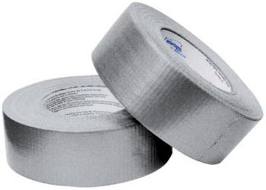
duct tapeYears ago I worked with a crusty, old [like maybe 40!] Scottish motorcycle mechanic named Stewart. His brogue and the fact that he had lost one leg below the knee in a motorcycle accident made him seem more like a pirate than a master mechanic.

He used to fill the junior mechanics, me among them, with his hard-earned words of wisdom. The one that remains with me all these years later was: “If it CAN be lubricated it NEEDS to be lubricated and if it CAN be adjusted it NEEDS to be adjusted.”

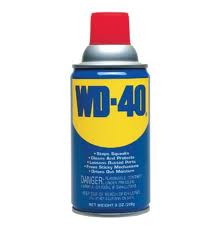
He had one other simple explanation for the mysteries of the mechanical world. “If it moves and shouldn’t, use duct tape [DUCT, not duck]. If it doesn’t move and it should, use WD-40.” You’d be amazed at how often that’s all you need to know.

In some ways life as a runner – or walker or cyclist or any of 100’s of other activities – is almost that simple. If it hurts you’re doing too much. If it doesn’t hurt, you’re not doing enough. If you think about it, it’s pretty much all you need to know about training. Too much, something hurts. Too little, it doesn’t feel like you’re doing anything at all.wd40

Unlike the mechanic’s dilemma, the athlete’s dilemma is much more nuanced. If a little training feels good then most of us believe that more training will feel even better. If we start seeing progress in our training by doing speed work one day a week then we’re sure we’ll progress twice as fast if we do two sessions a week.

On the other hand, if we’re feeling achy and sore and know we need to take time off we’re never sure exactly how much rest is enough and how much is too much. And nothing that we experienced previously can help us decide. As George Sheehan wrote, “We are all an experiment of one.”

The best we can do is use the time-honored method of trial and error. We’ll get it right sometimes. We’ll get it wrong sometimes. All that matters is that we keep trying to figure it out.

Even Stewart couldn’t argue with that.

Waddle on, friends.

John

An Accidental Athlete is available in print and ebooks versions now. BUY THE BOOK

Review An Accidental Athlete on Amazon or Barnes and Noble

What others are saying: Looking for some motivation to start running and improve your fitness? You’re sure to find some inspiration from John Bingham’s new memoir, “An Accidental Athlete.” As an overweight, uninspired pack-and-a-half-a-day smoker, Bingham realized that he had to make some changes in his life and began running at the age of 43. With wit and humor, Bingham recounts his journey from couch potato to self-proclaimed “adult on-set athlete.”ESPN Gear Guide

For the Love of Running

legends1I suppose a little context for this photo would help. On the left, as you look at the photo, is Frank Shorter. In the center is Steve Scott and on the right – waving his hands – is Rod Dixon. They are all legends in their own right if for no other reason than that they are Olympians. But they are so much more than that. And what they’ve been able to accomplish as athletes is no less astonishing now than it was when they were at the peak of their careers.

Rod, the flying Kiwi, a New Zealander, has been called by some the most complete and versatile runner of all time. He had world records, or competed at the world-class level, at every distance from 800 meters to winning the 1983 New York City Marathon. Steve Scott has run more sub-4 minute miles [136] than anyone in history has – or will. And Frank Shorter is known mostly for his 1972 Gold Medal victory in the Olympic Marathon and bringing long-distance running into the mainstream.

For each of them what they would consider their glory years are far behind. That’s not to take anything away from their great careers and accomplishments, only to suggest that for them – for me – and for most of us it isn’t just about the glory. It’s about the activity. It’s about running and walking. The joy is in the movement, in the finding out, in the surprises that are always lurking in the shadows.

Frank Shorter summed it up. He contends that there is an activity that suits each of us. It could be running, walking, swimming, biking, or any of a hundred other activities. Our challenge is to find that activity that feels best, the one that makes our bodies and our souls feel connected, the one that frees our minds from the constraints of mental aspects of the activity and frees us to simply move.

Even though I started moving later in life, I discovered almost immediately that I liked walking, and running, and cycling.  When I was participating in triathlons I tried to like swimming but it never worked. I understand why people like it. I just don’t.

I feel very lucky to have discovered an activity that I can do for the rest of my life. Frank and Rod won’t win any more Olympic medals. Steve will never run another sub-4 minute mile. For them, for me, for you – I hope  – it doesn’t matter. We can move.

Waddle on, friends.

An Accidental Athlete is available in print and ebooks versions now. BUY THE BOOK

Review An Accidental Athlete on Amazon or Barnes and Noble

What others are saying: Looking for some motivation to start running and improve your fitness? You’re sure to find some inspiration from John Bingham’s new memoir, “An Accidental Athlete.” As an overweight, uninspired pack-and-a-half-a-day smoker, Bingham realized that he had to make some changes in his life and began running at the age of 43. With wit and humor, Bingham recounts his journey from couch potato to self-proclaimed “adult on-set athlete.”ESPN Gear Guide

I’m not ignorning you. I just don’t know where your message is.

emailI was a very early adopter to email. In 1984, when I was an administrator at School of Music at The University of Illinois at Urbana-Champaign, I had an email address. The only other person I knew that had an email address was the Director of Graduate Admissions. His office was one floor above mine. Since we only had each other to email it wasn’t hard to keep up with my messages.

I was also an early adopter to AOL. Yes, I heard it thousands of times: “You’ve got mail.” I thought I was just about the coolest guy on the planet. I had a modem and I could dial in from anywhere. I could even set the modem to automatically pull mail in the middle of the night so that I could sit in front of the computer with my first cup of coffee.

By the early 2000’s I was getting email messages all day every day. And because the internet was global, so were the emails. I remember my mom being surprised that I got emails “over night.” She didn’t grasp that on the internet there is no night and day, just a continuous stream of data.

Then came domain names and email boxes. Then came email services. Suddenly I had messages scattered across several email addresses [thepenguin@johnbingham.com, john@johnbingham.com, jjbingham@earthlink.net to name just three that are still active] In addition to my AOL account [anyone remember RWPenguin@AOL.com?] I had a Yahoo account and others that I can’t even remember. I had Yahoo groups and the Penguin Brigade listserv. And that was before Google, Facebook, and Twitter.

Now, I have messages coming at me from all directions. There are 3 Facebook accounts [jjbingham, johnthepenguinbingham, and 100dayschallenge] that I personally monitor. There are all the event Facebook accounts. There’s the Twitter account. And, of course, the routine emails.

So, if you’ve emailed me, or messaged me, or IM’ed me, or Tweeted me, or anything else I you haven’t heard back from me, please don’t take it personally. I’m not ignoring you. I just don’t know where your message is.

Waddle on, friends.

You can follow me on Twitter: @jjbingham and on Facebook: @johnthepenguinbingham

An Accidental Athlete is available in print and ebooks versions now. BUY THE BOOK

Review An Accidental Athlete on Amazon or Barnes and Noble

What others are saying: Looking for some motivation to start running and improve your fitness? You’re sure to find some inspiration from John Bingham’s new memoir, “An Accidental Athlete.” As an overweight, uninspired pack-and-a-half-a-day smoker, Bingham realized that he had to make some changes in his life and began running at the age of 43. With wit and humor, Bingham recounts his journey from couch potato to self-proclaimed “adult on-set athlete.”ESPN Gear Guide

Why I Won’t Wear a Fedora

fedoraI’m a hat guy. Anyone who’s a hat guy knows what I mean. I like hats. I really, REALLY like hats. If I go to an event, buy a hat. If I like a product, I buy a hat. If I like ANYTHING, I buy a hat. I have running hats, motorcycle hats, NASCAR hats, Army hats… let’s just say I have a lot of hats.

The one hat that I don’t have, and don’t think I’ll ever have, is the Fedora, especially as it is worn these days. My grandfather wore a Fedora. A beautiful, dark gray Fedora. It capped his outfit when he was dressed up. It covered his head when it was raining. It wasn’t a statement. It was a hat. It functioned.

The Black-Eyed Peas singer willi.am wears a cool Fedora and he looks great. For him it’s a natural part of his image. He’s not trying to create the image with the hat. The hat is an extension of the image.

When I first started running I bought a Timex 8-lap Ironman watch. It had a chrono, a timer, alarms, and other things that didn’t know how to use. But it was a running watch. I was a runner. I wore a running watch. I didn’t wear it only when I was running. I wore it ALL the time. Sitting in a boring faculty meeting I could review my previous runs. And, besides, I wanted everyone to know that even though I was still this overweight administrator, I was a runner. Or at least trying to be.

As much as I needed the people in my life to know I was a runner, I needed to wear the running watch to remind myself that I was a runner. Somehow I figured if I wore a runner’s watch I would automatically be considered a runner. The funny thing is, it worked.

Of course, I also wore my running shoes all the time, wore every cotton event t-shirt that I got no matter how ugly [by the way, I think technical event shirts are a mistake, but I’ll save that for another time] and did everything I could do to give the impression that I was a runner. I gave the impression of being a great runner right until the gun went off.

These days I wear comfortable shoes when I’m not running. Shoes that are better for my feet than running shoes are. When I’m not running I wear a watch that tells the time. I wear plain t-shirts. Anyone seeing me out on the street would have no idea that I’m a runner. But I am. And I don’t need to prove it to anyone anymore.

That’s why I won’t wear a Fedora. I’m not that cool. I’m not going to try to pretend I’m that cool.  I don’t need to try to make anyone else believe that I’m that cool.

And my guess is that unless you’re will.i.am, you’re not that cool either.

Waddle on,

John

An Accidental Athlete is available in print and ebooks versions now. BUY THE BOOK

Review An Accidental Athlete on Amazon or Barnes and Noble

What others are saying: Looking for some motiviation to start running and improve your fitness? You’re sure to find some inspiration from John Bingham’s new memoir, “An Accidental Athlete.” As an overweight, uninspired pack-and-a-half-a-day smoker, Bingham realized that he had to make some changes in his life and began running at the age of 43. With wit and humor, Bingham recounts his journey from couch potato to self-proclaimed “adult on-set athlete.”ESPN Gear Guide

This Time for Sure

profileforfacebookI am not a Blogger. I’m not sure that anyone is a blogger anymore, except people who insist on calling themselves “bloggers” because they, well, BLOG. Blogger, it seems to me, kind of went the way of “jogger”. Runners used to call  joggers “joggers” because they didn’t want them confused with “runners.” If you’re a “runner” you want to make sure that everyone knows that you’re not a jogger.

I am a writer. Well, no, that’s not exactly true. I have written. I’ve authored. But, I think most writers would consider me a columnist. Old school writers and a lot like old school runners. They, the writers, want to make sure that everyone knows that they are writers, not columnists or – in some cases – authors.

Then there’s the editors. They’re not writers or authors or columnists. They’re editors. They edit. They take what writers and authors – and even columnists – write and they edit it. The best editors make what writers write easier to read and understand without changing the underlying voice. The worst ones re-write to the point that the writer doesn’t even understand what was written. In my career I’ve had some of both kinds of editors.

This is not a blog. Honest. It’s not. It’s something else. I’m not sure what. But it’s not a blog. I post on Facebook. It’s not a post. I tweet on Twitter. It’s not a tweet. I guess if a post is a long tweet then this is a long post. But it’s not a blog.

You see, I’m not a blogger. I’m a – wait, I think I have it – I’m a digital columnist. Nah. That’s not good either. You know what? I am a writer. The “columns” started out as letters to my friends. I wrote those letters. For 2013 I’m going to write this – whatever it is – in the same spirit. This time for sure.

Waddle on, friends.

An Accidental Athlete is available in print and ebooks versions now. BUY THE BOOK

Review An Accidental Athlete on Amazon or Barnes and Noble

What others are saying: Looking for some motivation to start running and improve your fitness? You’re sure to find some inspiration from John Bingham’s new memoir, “An Accidental Athlete.” As an overweight, uninspired pack-and-a-half-a-day smoker, Bingham realized that he had to make some changes in his life and began running at the age of 43. With wit and humor, Bingham recounts his journey from couch potato to self-proclaimed “adult on-set athlete.”ESPN Gear Guide

The Art of Rock ‘n’ Roll

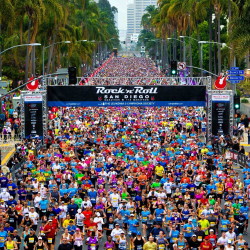
I can’t be sure, but I’m pretty sure that the photo of the start of the first Rock ‘n’ Roll Marathon in June of 1998 was not nearly as colorful as the 2012 edition. I know that I was wearing a white singlet, as was just about every else around me.

February 3, 1959 might have been the day the music died, you youngsters can just Google “Buddy Holly” if you don’t understand the reference, but June of 1998 is when the Rock ‘n’ Roll Marathon series started, and with it a whole new generation of runners, walkers, and waddlers.  I know. I was there.

I went to the first RnR marathon as a member of the Runner’s World Magazine Pace Team. I can’t remember everyone who was there since all of them have left the magazine, but I remember that it was a motley crew of editors and writers and one new columnist. Me.

As I recall the fastest pace team was for a 3 hour finish. It went up every 10 minutes through 4 hours, then went to 4:30 and 5:00 hours. I was, of course, the 5 hour pacer. I was new to writing, new to running, and very new to pacing. No one seemed to care. A few hundred of us lined up to run/walk/dance our way through 26.2 miles.

And that’s exactly what we did. We ran some. We walked some. We danced some. And we laughed A LOT. It was sensational. I don’t remember the exact time we finished, but, I certain we missed the 5 hour target. Somehow it didn’t matter. We were having too much fun.

Since that humble beginning the Rock ‘n’ Roll series has grown to over 20 events nationally, and at least 5 international events. The 12,000 of us who lined up in 1998 gave rise to nearly 250,000 finishers of Rock ‘n’ Roll events in 2011. It’s an amazing tribute to the vision of Tim Murphy, then president of Elite Racing, and his capable gang of followers.

I’ve been at every Rock ‘n’ Roll marathon since. In 1999 my son, Terry, and I rode motorcycles from New York City to San Diego and then ran the marathon. In 2,000 I spoke for the first time at the Team in Training Inspiration Dinner, and I’ve been with the Team ever since.

Many of the years run together – pun intended. There were great years, hot years, cool years, fun years, and some that were brutal. The year I finished so exhausted that I sat in my car for nearly an hour before I could find the strength to change clothes. But no matter, it was a rockin’ good time.

This year I interviewed Olympians Jim Ryun, Ryan Hall, Rod Dixon, Deena Kastor and the legendary miler Steve Scott. I sat on stage with these extraordinary athletes and felt right at home. I was humbled to be sitting next to them, but I didn’t feel out of place. I had, like that had, earned the right to be there.

I hope to be there for the 20th, or 25th. It will be fun to see folks running the marathon that weren’t even born when we ran the first one.

Waddle on,

John

An Accidental Athlete is available in print and ebooks versions now. BUY THE BOOK

Review An Accidental Athlete on Amazon or Barnes and Noble

What others are saying: Looking for some motivation to start running and improve your fitness? You’re sure to find some inspiration from John Bingham’s new memoir, “An Accidental Athlete.” As an overweight, uninspired pack-and-a-half-a-day smoker, Bingham realized that he had to make some changes in his life and began running at the age of 43. With wit and humor, Bingham recounts his journey from couch potato to self-proclaimed “adult on-set athlete.”ESPN Gear Guide

Running with the Dolphins: The Sequel

Bob Dolphin is an amazing man. His wife, Lenore, equally so. Together they represent just about everything that’s good about the running community. They are warm. They are giving. They are accepting. And they are indomitable.

A short recap: In March of 2007 I was invited to speak at the dinner before the Yakima River Canyon Marathon. This event is part race, part family reunion, part 12-step meeting. In addition to the regular participants there is always a large gathering of the Marathon Maniacs club, the 50 States Marathon Club, and the 100 Marathons club. You begin to see a theme?

There are always a hand full of first timers but most of the crowd is there because it’s the only place where you can feel normal if this is your 300th marathon. It’s also the only place where when someone says they’ve run 25 marathons in the last year the other folks will ask if they’ve been injured. It’s a strange and wonderfully unique crowd.

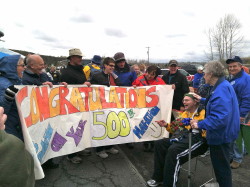
The occasion for the 2007 visit was to celebrate Bob Dolphin’s 400th marathon. He was, I think, 78 years old at the time. On race day he came across the finish line strong and looking good. We all cheered. Then Lenore asked me if I’d come back to celebrate Bob’s 500th marathon. I took one look at Bob and thought – no matter how good he looked – there was no way he’d keep going for another 100 marathons. So, I said “OF COURSE”.

I’d bump in to Lenore and Bob at events throughout the year and Lenore would always give me a running count of where Bob was. 2008 came and went and Bob was up to 420 or so. 2009, 2010, 2011 were in the books are so were nearly 100 marathons. Then the phone call came. Lenore reminding me that I had promised to be in Yakima for Bob’s 500th and that I should get my plane ticket.

That’s how it came to be that on March 30, 2012 I was standing at the finish line in near disbelief as Bob walked crisply across the finish line. Bob, a former Marine, looked weary but determined. And, as always, Lenore who has had her own health struggles, was there to greet him along with a host of friends and family.

What now? I don’t know. Bob has 10 more states to go in order to have run a marathon in all 50 states. I’m know that’s a goal he wants to complete. But, I hope he takes his 500 marathon pin and decides that enough is enough.

In song and in scripture there is the advice: To every thing there is a season, and a time to every purpose under the heaven: Ecclesiastes 3:1 It’s a tricky business knowing when the season is over. It’s not easy to accept that the summer sun is gone, that the fall has left the trees bare, and that it is time to accept that the early darkness means that it’s winter.

Whatever he decides, he will take it on with enthusiasm, character, and good humor. And whatever that is, I wish them both the best that life has to offer. They are, without question, the best of all of us.

Waddle on,

John

An Accidental Athlete is available in print and ebooks versions now. BUY THE BOOK

Review An Accidental Athlete on Amazon or Barnes and Noble

What others are saying: Looking for some motiviation to start running and improve your fitness? You’re sure to find some inspiration from John Bingham’s new memoir, “An Accidental Athlete.” As an overweight, uninspired pack-and-a-half-a-day smoker, Bingham realized that he had to make some changes in his life and began running at the age of 43. With wit and humor, Bingham recounts his journey from couch potato to self-proclaimed “adult on-set athlete.”ESPN Gear Guide

Groundhog Day

If you haven’t seen the movie Groundhog Day, I strongly encourage you to see it. I think it’s Bill Murray’s best work. The movie is funny enough on it’s face, but if you look beyond the gags the allegory is really poignant. I don’t think it gives away the plot to suggest that the point is that until you’re willing to take some risks and take action to change your life you’ll be living the same day over-and-over even if the calendar date changes.

That was certainly the case for me. There were lots of external changes in my life. I went from being in school to being in grad school to being in the Army to being back in school to getting a job and so it went. I was married. I was not married. I was married again. And so it went.

I changed jobs, changed careers, changed the geography of my life and yet, sooner or later, everything that I had been became everything that I was: again. Like so many people I weighed too much, I ate too much, and  I drank too much. So I tried eating less, drinking less, cutting out carbs and fats and protien. I ate nuts and bananas, eggs and cheese, fat free yogurt and low fat peanut butter. For a while.

But who I was always resurfaced. It didn’t matter what I did to the outside of myself the inside of me stayed the same. I was going around in circles. Every day was the same day. It was the movie Groundhog Day and I was the star.

It all changed the day I took my first run. It was more of a walk, or a waddle, or a stumble. It was movement. Forward movement. And even though I ended up where I started out I knew that I had gone somewhere. That experience of moving – slow, steady, relentless moving – was new. Something was changing. Slowly, for sure, but changing. I was changing. With each run I got farther away from who I’d been and closer to who I was becoming.

So when I watch Bill Murray finally come to grips with the truth that the biggest problem in his life was that he was the one living it, I smile. When I remember all the excuses I had for not being active, for not eating better, for not living a life with more purpose, I smile. It was never relationships or bosses or experiences that help me back. It was me.

If your life feels like Groundhog Day, I understand. I’ve been there. I lived there.

But I can tell you that it doesn’t have to stay that way. Life can change. YOU can change. And you can do it with nothing more than your own two feet.

Waddle on,

John

An Accidental Athlete is available in print and ebooks versions now. BUY THE BOOK

Review An Accidental Athlete on Amazon or Barnes and Noble

What others are saying: Looking for some motiviation to start running and improve your fitness? You’re sure to find some inspiration from John Bingham’s new memoir, “An Accidental Athlete.” As an overweight, uninspired pack-and-a-half-a-day smoker, Bingham realized that he had to make some changes in his life and began running at the age of 43. With wit and humor, Bingham recounts his journey from couch potato to self-proclaimed “adult on-set athlete.”ESPN Gear Guide

100 Chronicles and more

Another from The Penguin Chronicles archive.

How my running life began, and why it’ll never get old.

There was a time when becoming a runner was the farthest thing from my mind. Runners were, or so I thought, a lost group of tortured souls with tortured soles, achy muscles, and creaky knees. They were – as best I could tell from the safe distance I kept from all matters requiring movement – either pain addicts or fools. If they were the former they were to be pitied. If they were the latter, they were to be unmercifully mocked.

At the time, I was a graduate student at the University of Illinois and I knew only one runner. I listened to him describe his latest foray into marathon madness with equal measures of shock and amusement. And as he told in graphic detail the exact place and degree of chafing that occurred on his body, my amusement turned to horror. His stories of blisters were not for the faint of heart.

Somewhere between the black toenails and bleeding nipples I decided that he simply didn’t have the courage to actually kill himself in one fatal act so he was going to accomplish it one mile at a time. Worse, to my way of thinking, he was actually proud of himself. Did he really think that a group of non-runners would applaud this lunacy? We didn’t. We sat in silence. It was madness pure and simple.

In time graduate school, my runner friend, and his stories faded into the shadows of my memories, and I pursued employment and other endeavors. Thoughts of running disappeared for more than a decade. Then, at 43, when I was an associate dean at Oberlin College, I had one colleague who was becoming a runner and another who was an avid cyclist. They seemed to have something I didn’t, although I didn’t know what that was. I couldn’t bring myself to run at first, so I bought a bike. Later, I decided to try to become a runner.

Like most beginning runners, I ran too much too soon. I ran too fast and too far. I discovered almost immediately what I was running from. I was running from where I had been, where I was, and where I was headed. But like so many runners, no matter how far or how fast I ran, I always ended up right where I had started. With myself.

I got what help I could from this magazine. I took what I could understand from Hal Higdon, Joe Henderson, and the late, great running philosopher George Sheehan. I read their words but didn’t really know their meaning. I knew what it was to run, but had no idea what it was to be a runner.

The only way I could make sense out of my running was to write about it. It started simply enough by keeping a logbook. That soon gave way to writing a running journal, and that eventually gave way to writing fervently about running. I discovered early on that it wasn’t the sport of running that attracted me but the act of running. It was in the pounding of my own heart, in the rhythm of my own breathing that the answers began to come. The answers came if, and only if, I kept running.

I had written to a group of runners on the Internet. “Runner’s World” editor Amby Burfoot called me and asked if I would write eight columns. That was the original agreement. One phone call, eight columns. And with that my life changed.

I wrote in one of those first columns that my running shoes had become giant erasers on my feet. Each footstrike wiped away the memory of some earlier indiscretion or failure. Each new pair of running shoes carried the potential of unlocking some secret place. Each pair of worn-out running shoes carried with them the scars of a healing soul.

One hundred columns later I am still here. More importantly you, the readers, are still here. You are, and have always been, the greatest gift that I have gotten from writing. We have dared to share our lives with one another. Together we have seen each other through 100 months of successes and failures.

I’ve seen life as a non-runner and as a runner. I can tell you with complete assurance that I’ve chosen, and will continue to choose, running. Without running there are no runners. And I’ve learned that a runner is everything I hope to be.

Waddle on, friends.

John

An Accidental Athlete is available in print and ebooks versions now. BUY THE BOOK

Review An Accidental Athlete on Amazon or Barnes and Noble

What others are saying: Because of runners like John, the wall of intimidation has crumbled, and tens of thousands of Americans are now believing in themselves. John has helped raise self-esteem and self-confidence in people all over the world. Nothing is more important to a person’s well-being.Dave McGillivray, Boston Marathon race director